 Skip to content
Summarize with
Door locks fail most often due to structural misalignment between the door and its frame, the accumulation of internal debris, or the mechanical fatigue of internal components like springs and cams. These door lock problems often start with small signs like a sticking key or a latch that requires extra force to click into place. Addressing these issues immediately prevents complete mechanical failure and maintains the security of the property.
Reliable lock operation depends on the precise movement of small metal pins and springs. When these parts lose their lubrication or face environmental stress, the door lock not working becomes a safety risk. Integrity Key Lock & Safe of Texas offers this technical guide based on years of field experience to help property owners identify common door lock issues before they result in a total lockout.
Primary Causes of Mechanical Lock Failure
Mechanical locks are subject to physical laws that eventually lead to wear. Understanding why a lock stops functioning helps in determining whether a simple cleaning or professional locksmith services are necessary.
Structural Shifting and Misalignment
Foundation settling or changes in humidity levels often cause door frames to shift slightly. Even a movement of a few millimeters can cause the latch bolt to hit the strike plate instead of entering the hole. This misalignment puts immense pressure on the lock mechanism when someone forces the door shut. Over time, this pressure bends the internal tailpiece or shears the screws holding the lock in place.
Accumulation of Grime and Broken Springs
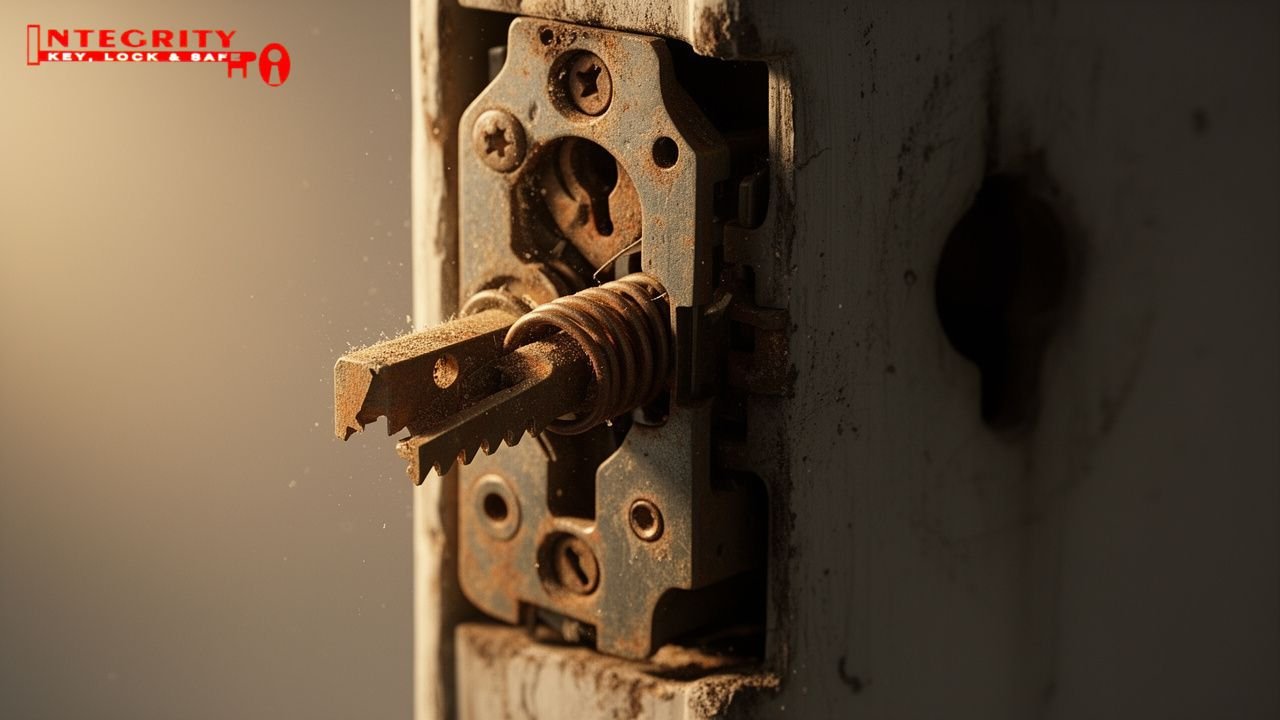
Locks located on exterior doors face constant exposure to dust, pollen, and moisture. These particles mix with old factory grease to create a thick paste that clogs the pin chambers. When the pins cannot move freely, the key will not turn. Inside the cylinder, tiny springs hold the pins in tension. If these springs snap or lose their elasticity, the lock loses its ability to recognize the correct key.
Key Damage and Low-Quality Duplicates
Often, the problem is not the lock itself but the key. Brass keys wear down over years of use, losing the sharp peaks and valleys needed to set the pins. Similarly, keys cut at high-volume kiosks sometimes have slight imperfections. Using a poorly cut key forces the internal components to sit at incorrect heights, which accelerates the wear on the cylinder.
Identifying Specific Symptoms
Recognizing the specific behavior of a failing lock helps in choosing the right door lock repair method. Beyond physical wear, the way a lock behaves provides vital clues; the following table provides a reference for matching symptoms with likely causes.
Troubleshooting Common Lock Behaviors
| Observed Symptom | Potential Root Cause | Recommended Action |
| Key enters, but will not rotate | Seized pins or frozen cylinder | Apply dry lubricant |
| Latch does not retract when turning the knob | Broken internal spindle or cam | Replace internal housing |
| Door only locks if pushed or pulled hard | Frame misalignment | Adjust strike plate position |
| Key is stuck inside the cylinder | Broken spring or misaligned plug | Contact a professional for extraction |
| Lock feels "mushy" or lacks a click | Worn-out tension spring | Complete lock replacement |
Bonus Tip: Avoid using liquid oils like WD-40 in lock cylinders. These attract dust and create a sticky residue that eventually causes the lock to seize completely. Use a dry PTFE or graphite-based lubricant instead.
External Factors Impacting Security Hardware
While internal wear is common, external factors also significantly impact how long a lock remains functional. According to technical data from Consumer Reports, extreme temperature fluctuations cause metal components to expand and contract, which may lead to hairline fractures in zinc or brass parts.
Weather-Related Stress
In regions with high humidity or coastal salt air, oxidation occurs rapidly. Rust can fuse the internal components together, making it impossible to turn the cylinder even with the correct key. Regular maintenance, such as wiping down the hardware and checking for signs of corrosion, extends the life of the unit.
Frequency of Use
The number of cycles a lock undergoes directly impacts its lifespan. Commercial locks are graded for hundreds of thousands of cycles, while standard residential locks may fail sooner under heavy traffic. If a residential lock is used on a high-traffic business door, the internal cam will likely fail within a year.
Data from the FBI Uniform Crime Reporting program suggests that a significant percentage of residential burglaries occur through doors with compromised or weak locking mechanisms. Keeping locks in peak condition is a primary step in crime prevention.
When to Call a Locksmith
While some maintenance tasks are manageable for homeowners, certain situations require professional locksmith services to ensure the door remains secure and the warranty stays valid.
Emergency Lockout Situations
If a key breaks off inside the lock or the mechanism fails while the door is closed, emergency locksmith services are necessary. Attempting to drill the lock or pry the door open often results in expensive damage to the door itself. Professionals use specialized extractors and non-destructive entry techniques to resolve the issue.
Electronic and Smart Lock Failures
Modern smart locks involve both mechanical parts and electronic circuit boards. When a smart lock stops responding to codes or apps, it may be a software glitch or a solenoid failure. Integrity Key Lock & Safe of Texas technicians have the tools to diagnose whether the issue is a simple battery drain or a complex board failure that requires expert door lock repair.
Upgrading Security After a Breach
If a lock has been tampered with or damaged during an attempted break-in, the structural integrity of the metal is likely compromised. A professional can assess whether the internal housing is cracked and provide high-security replacements that offer better resistance to picking and drilling.
Things to Consider Before Making a Decision
Before choosing between a repair and a full replacement, evaluate several factors to ensure the best long-term outcome for the property.
- Hardware Age: Most residential locks have a functional life of about 7 to 10 years. If the hardware is nearing this age, replacement is usually more cost-effective than repeated repairs.
- Security Grade: Check the ANSI/BHMA grade of the lock. Grade 1 is the strongest, often used for commercial applications, while Grade 3 is standard for residential use. Upgrading to a higher grade during a repair can improve home security.
- Key Compatibility: Consider if the new or repaired lock needs to be keyed alike with other doors in the home. This requires a professional who can rekey the cylinders to match a single key.
- Warranty Status: Some high-end locks have lifetime finishes or mechanical warranties. Check with the manufacturer before attempting DIY repairs, as opening the lock case might void the protection.
Bonus Tip: If the door is sagging, a lock repair will only be a temporary fix. Check the hinges and tighten the top screw with a 3-inch wood screw to pull the door back into alignment before adjusting the lock.
Common Questions
Why does the key work on one side of the door but not the other?
This usually indicates that the cylinder on one side has worn pins or a damaged spring. It can also happen if the tailpiece that connects the two sides is slightly bent, preventing the torque from reaching the other side.
Is it possible to fix a lock that turns but does not open the door?
This is a sign of a "disconnected" lock, meaning the internal cam or spindle is broken. The cylinder is turning, but it is no longer moving the latch. This requires replacing the internal chassis of the lock.
Can a locksmith fix a lock without the original key?
Yes, professional locksmiths can disassemble the lock and create a new key based on the internal pin heights, or they can rekey the lock to a completely new key by replacing the pins inside.
Frequently Asked Questions
Can cold weather cause my door lock to stop working?
Yes, moisture can get inside the lock and freeze, preventing the pins from moving. Metal also contracts in the cold, which may worsen an existing misalignment between the door and the frame.
How often should I lubricate my door locks?
It is best to lubricate exterior locks at least once a year. In harsh environments with lots of dust or salt air, doing this every six months helps prevent the buildup of debris and oxidation.
Is it cheaper to rekey or replace a lock?
Rekeying is almost always more affordable. It involves changing the internal pins so the old key no longer works, while replacing requires buying entirely new hardware. Rekeying is the better choice if the hardware is still in good physical condition.
Why does my lock only work if I lift the door handle?
This is a classic sign of a sagging door. The latch is sitting too low for the hole in the strike plate. Lifting the handle aligns the latch, allowing it to retract or extend. Tightening the door hinges usually fixes this.
Can I repair a lock that was damaged by a break-in attempt?
In most cases, a lock that has been hit with a hammer or pried with a screwdriver should be replaced. Even if it seems to work, the internal metal may have microscopic cracks that could cause it to fail unexpectedly later.
Summary of Advice
Maintaining functional door locks requires attention to both the mechanical components and the alignment of the door. Most door lock problems stem from simple wear, lack of lubrication, or shifting frames. By identifying these issues early, property owners can avoid the stress of a lockout. Regular maintenance with dry lubricants and periodic inspections of the door hinges can prevent the majority of common door lock issues. When the lock hardware is old or the security has been compromised, seeking professional locksmith services ensures the job is done correctly and the property remains safe. Evaluate the age and grade of the hardware before deciding on a repair to ensure the investment provides long-term security.
Professional Locksmith Assistance
For those dealing with a door lock not working or requiring expert lock repair services, Integrity Key Lock & Safe of Texas provides specialized support. Contact the office at (830) 868-8608 or via email at clark@integritykeytexas.com to discuss residential or commercial security needs. Providing reliable door lock repair and emergency locksmith services, the team focuses on restoring safety and functionality to every entryway.
Sources
- Consumer Reports – Detailed information on door lock safety testing and hardware reliability.
- Statista – Market data regarding the growth and trends of the home security hardware industry.
- National Insurance Crime Bureau – Resources on property protection and the role of physical security in preventing theft.
- FBI Uniform Crime Reporting – Statistical data on residential entry methods and security trends.
- The Spruce – Practical home maintenance guides for door and lock troubleshooting.